Wealth concentrates. That is not news. What is less obvious is the quiet hollowing out underneath. Supply chains stretch across oceans while neighbors don't know each other's names. Main streets empty. Local knowledge disappears. The economy grows, but it grows away from the people who do the actual work. The few accumulate. The many get by.
It does not have to stay this way.
Picture a cooperative economy. Businesses owned by the people who run them - not distant shareholders, not algorithms, not private equity. Your food ordered from local producers. Your daily goods made and distributed within your own community. Deposit-return systems that cut waste at the source instead of managing it after the fact. Wealth created here, staying here, circulating here.
This is not utopia. It is a design choice.
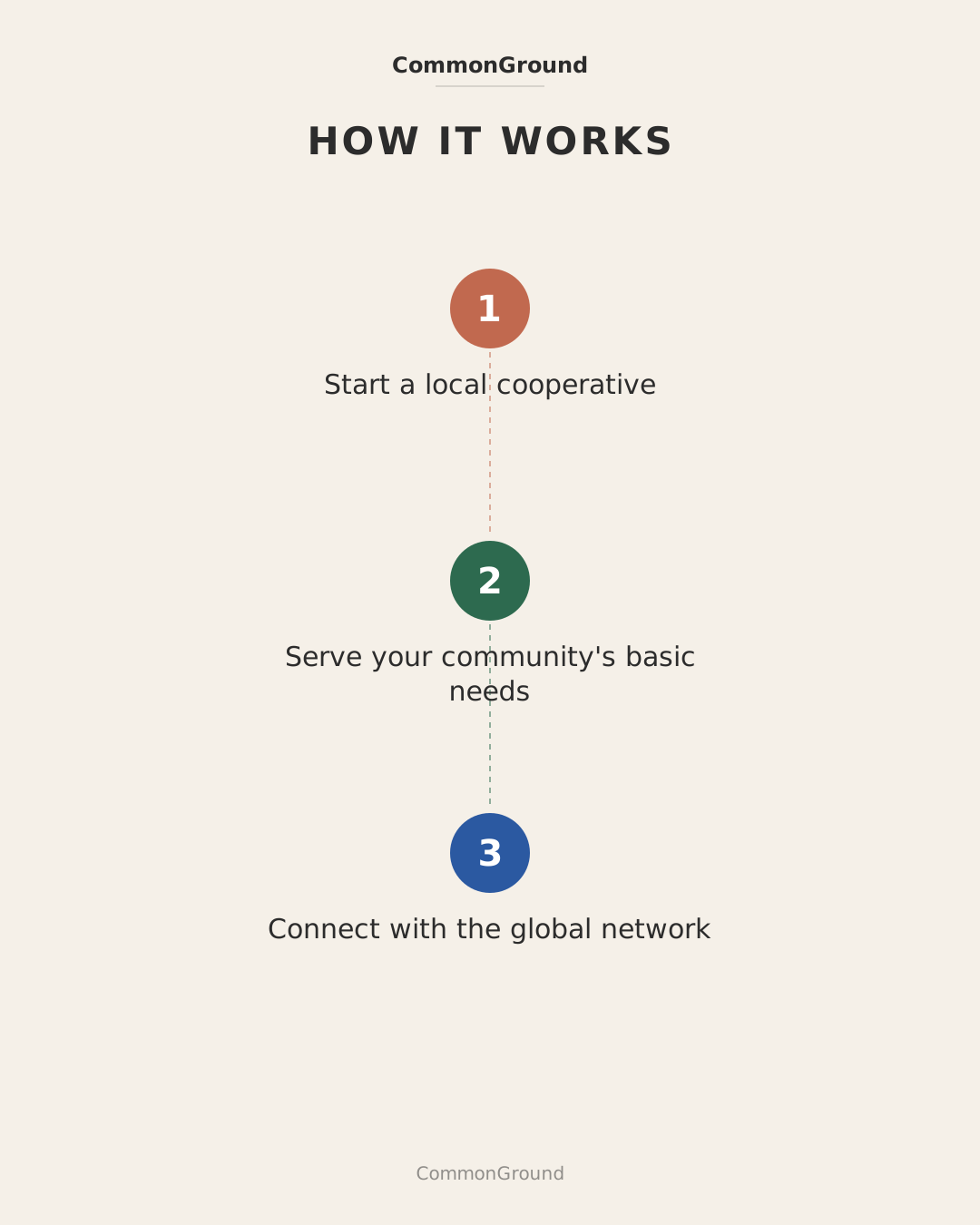
Start with your neighborhood. Find the people around you - the ones who grow food, who make things, who deliver, who organize. Build cooperative supply structures. Cover your basic needs first. A food ordering system that connects local growers to local tables. A production workshop for daily goods. A shared logistics network that keeps things moving without burning through the planet.
The cooperative does not run on goodwill alone. It runs on your everyday choices. When you order your groceries through the network instead of the supermarket chain, that is not just a purchase -- it is participation. Organized consumption is the engine. A community that buys together creates reliable demand. Reliable demand makes local production viable. Viable production means fair prices, shorter routes, less waste. Every member who shifts even part of their daily spending into the cooperative keeps the whole thing turning. You do not need to change everything at once. Start with bread. Add milk. The habit builds, and so does the economy underneath it.
When a cooperative works, it generates surplus. That surplus does not get extracted -- it gets reinvested. Back into the community. Into better tools, more capacity, the next cooperative down the road. One becomes three. Three become a network. The network keeps expanding. The common ground grows.
When cooperative ownership is the norm, justice is built into the structure. Everyone who works, owns. When production is local, supply chains are short and the earth carries less burden. When neighbors build something together, community is not an abstraction - it is Tuesday morning. And when cooperatives across borders share knowledge, share supply chains, and grow together, that is peace in its most practical form.
This is already happening. Small cooperatives in cities and towns are proving the model works. What they need is connection - to each other, to shared tools, to a global network that makes local economies stronger.
CommonGround is that network.
You do not have to start from zero. If you already run a business -- a bakery, a workshop, a delivery route -- you belong here too. Join the network. Source from local cooperatives. Supply them in return. Convert to shared ownership when it makes sense, or partner as you are. Every business that cooperates strengthens the common ground. The benefit runs both ways: you gain a local supply chain that actually works, and the community gains another piece of an economy that stays. The network rewards what works -- effective organization, smart solutions, real contribution. Wealth circulates generously among those who build the common ground. Together we build something no one builds alone -- shared prosperity for a world that is healthier and more peaceful than the one we inherited.
This is not a manifesto to pin on a wall. It is an invitation. Find your neighbors. Start something real. Connect with cooperatives near you and across the world. Build CommonGround.
The economy is not weather. We built it. We can rebuild it. Start where you are.